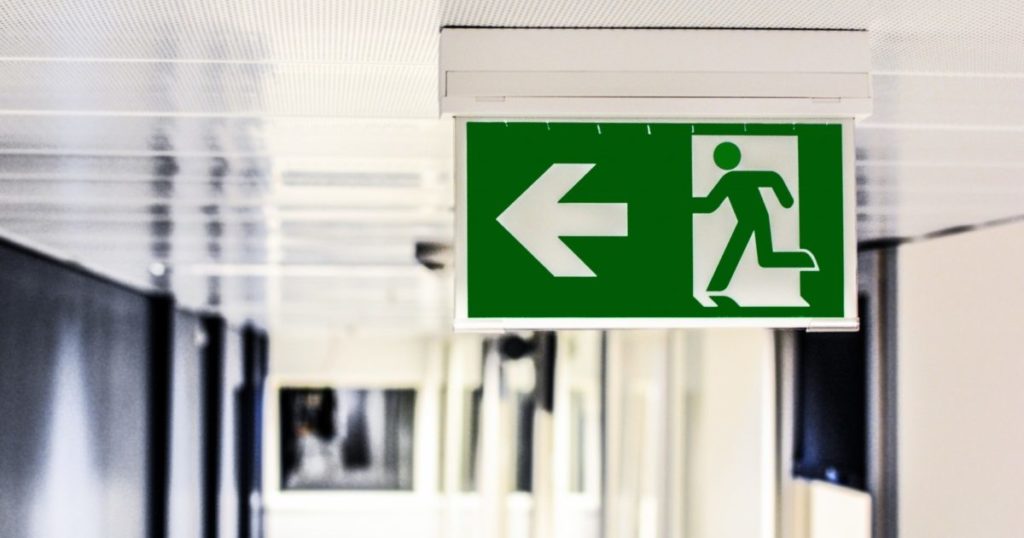
Five key areas to focus on from your Fire Risk Assessment
A review of outstanding Fire Risk Assessment (FRA) actions across our schools has highlighted a number of issues that are appearing regularly. To help schools work through their outstanding actions, we have identified five key areas to focus on. Some actions can be resolved relatively quickly by the school, while others will require support from Property Services or a competent specialist contractor.
The important thing is to review your own FRA actions, take appropriate action and keep Civica updated with progress and evidence.
🚪 1. Fire doors
Fire doors are currently one of the most common areas generating outstanding FRA actions. Issues include damaged or unsuitable doors, excessive gaps, missing intumescent or smoke seals, incorrect hinges and missing or defective self-closing devices.
Why does it matter?
Fire doors are an important part of a building’s passive fire protection. When correctly installed, maintained and closed, they help restrict the spread of fire and smoke and protect escape routes.
✅ What you need to do
- Check which doors are identified within your FRA.
- Make sure fire doors are not wedged or hooked open unless a suitable approved hold-open device is provided.
- Where defects have been identified, arrange for the door to be inspected and repaired by a competent fire-door contractor.
- Where replacement is needed, ensure the complete doorset and its components are suitable for the required fire-resistance rating.
- Obtain appropriate documentation or certification following specialist works.
- Add completion evidence to Civica, such as photographs or contractor documentation.
Remember: Raising an order, obtaining a quotation or requesting funding means the action is being progressed, but does not mean the action itself has been completed.
🧹 2. Housekeeping, storage and ignition sources
A significant number of outstanding actions concern combustible materials being stored too close to heaters, electrical distribution boards, printers, servers and laptop charging equipment. Obstructed escape routes and excessive storage also feature regularly.
Why does it matter?
Keeping sources of fuel away from potential ignition sources reduces the likelihood of a fire starting and developing. Good housekeeping is also essential for keeping escape routes available.
✅ What you need to do
- Remove combustible materials from around heaters and electrical equipment.
- Maintain any minimum separation distance specified in your FRA.
- Keep corridors, stairways, final exits and escape routes clear.
- Avoid using escape routes for storage or for locating equipment such as printers and charging trolleys.
- Keep electrical cupboards, boiler rooms and plant areas free from unrelated storage.
- Include housekeeping and escape-route checks within routine site inspections.
- Upload photographs to Civica once issues have been rectified.
💡 Quick win: Many housekeeping actions can be resolved immediately without requiring contractors or additional funding.
🚨 3. Fire alarm and detection
Outstanding actions also frequently relate to gaps in automatic fire detection, insufficient manual call points, missing visual warning devices, inadequate system coverage and fire alarm zone plans.
Why does it matter?
Early detection and warning provides occupants with valuable time to evacuate safely. The fire alarm and detection arrangements therefore need to remain suitable for the building, its layout and its occupants.
✅ What you need to do
Where your FRA identifies a deficiency:
- Refer the action to a competent fire alarm contractor.
- Ask the contractor to assess the system against the requirements identified in your FRA and the requirements of BS 5839-1.
- Obtain a written quotation or specification for any necessary works.
- Following completion, retain appropriate commissioning or modification documentation.
- Ensure zone plan or system records are updated.
- Upload the evidence and update the Civica action.
Where works are awaiting funding, Property Services or a contractor, make sure the action remains open and contains a meaningful progress update.
🪧 4. Fire safety signage
Missing or unsuitable fire safety signage is another recurring issue. Examples within the outstanding actions include fire exit signs, fire action notices, “Fire Exit Keep Clear” signs, directional thumb-turn signs and electrical/hazard warning signs.
Why does it matter?
Clear signage helps building occupants identify escape routes and understand how to operate escape doors. It can also alert staff, contractors and emergency responders to particular hazards.
✅ What you need to do
- Check the exact sign and location identified in your FRA.
- Obtain suitable, durable signage appropriate to the location.
- Ensure escape signage is clearly visible and not obscured.
- Position fire action notices appropriately and complete any site-specific information required.
- Check doors fitted with thumb turns or other emergency-opening devices have the appropriate operating instructions where required.
- Upload a photograph to Civica when the action is complete.
💡 Quick win: Signage is another area where many outstanding actions can be resolved relatively quickly and at low cost.
🧱 5. Compartmentation and fire stopping
Outstanding compartmentation issues include holes around cables and pipework, breaches within fire-resisting walls and ceilings, deficiencies within roof or ceiling voids and inadequate fire-resisting enclosures around higher-risk areas or equipment.
Why does it matter?
Compartmentation helps contain fire and smoke within a defined area for a specified period. Even relatively small penetrations can affect the performance of a fire-resisting wall, floor or ceiling.
✅ What you need to do
- Review the location and required works identified within your FRA.
- Do not assume ordinary expanding foam, filler or general-purpose building materials are suitable for fire stopping.
- Where necessary, employ a competent passive fire protection contractor.
- Ensure appropriate tested fire-stopping products and systems are used for the particular penetration and construction.
- Obtain suitable records of the completed works, including photographs and product/installation information.
- Upload completion evidence to Civica.
Where the FRA requires a compartmentation survey or further investigation, the action should remain open until that investigation has been completed and the findings addressed.
📝 Closing your FRA actions on Civica
Good evidence is important. Before closing an FRA action, make sure it is clear what has actually been done. Where appropriate, your update should include:
✔ What has been completed
✔ Who completed it
✔ The date the work was completed
✔ Photographs, certificates, reports or other supporting evidence
✔ Details of any continuing monitoring requirements
If an action cannot yet be completed, don’t leave it without an update. Record:
- the current position;
- who is responsible for progressing it;
- the relevant order/helpdesk reference;
- any funding request;
- contractor or quotation status; and
- the anticipated completion date.
These are important progress updates, but the FRA action should remain open until the identified risk has been suitably addressed.
🔥 Small actions can make a big difference
Not every FRA action requires major works or significant expenditure.
Clearing an escape route, moving combustibles away from a heater, putting up a missing sign or removing inappropriate storage from an electrical cupboard can often be dealt with straight away.
Completing these simpler actions promptly allows schools and Property colleagues to focus resources on the more complex actions requiring specialist contractors, surveys or investment.
📋Further guidance
Email the Fire Team: scfiresafety@somerset.gov.uk