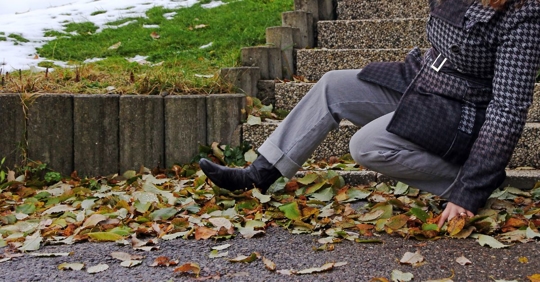
Darker evenings and colder weather can increase the risk of slips, trips and falls.
Slips and trips cause over a third of all major injuries and can also lead to other types of accidents, such as falls from height or into machinery.
At this time of year surfaces can be perilous, which means slip and trip accidents may become more frequent. There are plenty of seasonal factors to consider when avoiding these sorts of accidents including:
- Reduced daylight: Poor lighting makes it harder to spot hazards, especially in car parks, walkways, and building entrances.
- Wet and decaying leaves: These can create slippery surfaces both outdoors and indoors, as leaves and moisture are tracked inside.
- Excess water from rain: Rainwater increases the risk of slips at entrances, corridors, and on stairs.
- Ice, frost and snow: Freezing temperatures can quickly turn outdoor surfaces perilous, especially in the early morning or late evening.
What to Do After an Accident
- Report all slip, trip, and fall incidents promptly, and if they are significant enter them onto the Incident area of EEC.
- Investigate the cause and review risk assessments to prevent recurrence.
- Support injured staff and ensure any lessons learned are shared across the organisation.
Our Slips, Trips and Falls Policy and Guidance helps you to understand what causes slips and trips and how to prevent them and the Schools Guidance sheet provides a handy checklist for premises managers.
The HSE’s slips and trips webpages also provide plenty of further information and resources, including frequently asked questions such as the best way to use grit.