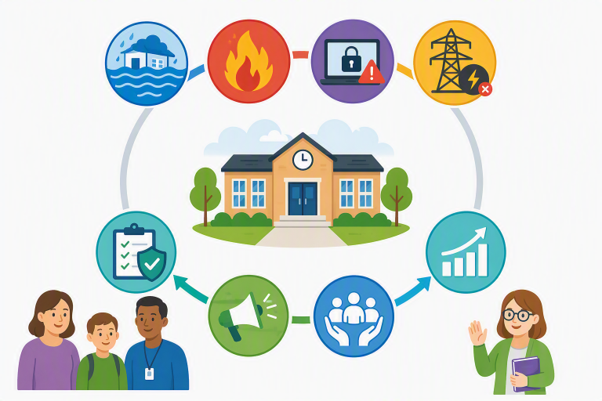
As we enter the autumn and winter months, schools may face disruption from severe weather, utility failures, staffing shortages, IT incidents and other unexpected events.
A current and tested Business Continuity Plan (BCP) will help your school to:
- Protect pupils, staff and visitors.
- Maintain critical school activities.
- Communicate clearly with parents, carers and partners.
- Minimise disruption.
- Recover normal services safely and promptly.
We recommend that schools take the following steps:
1. Review your current BCP
- Check key contacts, roles, suppliers and escalation arrangements.
- Confirm that deputies are identified for critical roles.
- Check that essential information can be accessed securely if the school site or normal IT systems are unavailable.
2. Consider significant disruption scenarios
- Flooding or loss of access to the premises.
- Fire or significant building damage.
- IT failure.
- Electricity, gas, water, heating or communications failure.
- Significant staff shortages.
- Severe weather or industrial action.
- Loss of catering provision.
- Loss of access to key school systems or pupil records.
3. Confirm critical activities
- Safeguarding and supervision.
- Communication with staff, parents and carers.
- Access to essential pupil information.
- Education provision.
- Support for vulnerable pupils.
- Catering, medication and essential premises functions
4. Test the arrangements
- Carry out a simple tabletop exercise using a realistic disruption scenario.
- Confirm who would make decisions and communicate updates.
- Record any gaps, actions, owners, and completion dates.
Business Continuity Plans should be reviewed and updated at least annually, and whenever there are significant organisational changes or lessons learned from an incident. Schools are also strongly encouraged to test their arrangements annually to ensure that plans remain practical, current and effective.